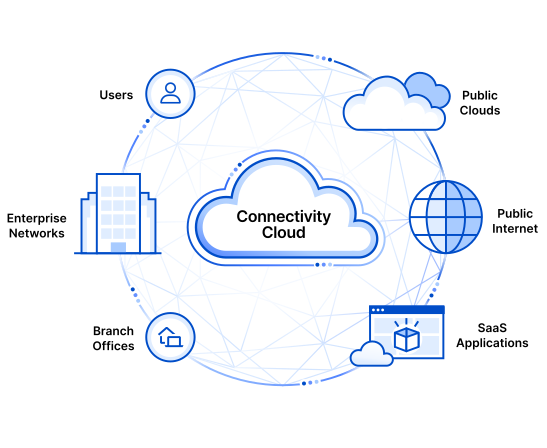
Understanding Digital Connectivity: How It Shapes Our Lives
In today's fast-paced world, digital connectivity is more than just a convenience; it has become a crucial part of our daily lives. With the rise of smartphones, tablets, and high-speed internet, we are constantly connected to a vast network of information and communication. This connectivity enables us to interact with people from different cultures and backgrounds, sharing ideas and experiences like never before. Furthermore, it has revolutionized various sectors, including education, healthcare, and business, making resources more accessible and efficient.
Moreover, the impact of digital connectivity goes beyond personal interactions; it actively shapes how we perceive the world around us. With social media platforms, news websites, and online communities, we can easily stay informed about global events and trends. However, this constant influx of information also raises challenges, such as information overload and the spread of misinformation. Understanding the dual nature of digital connectivity is essential for navigating this new landscape, allowing us to leverage its benefits while being mindful of its potential pitfalls.
Counter-Strike is a popular multiplayer first-person shooter game that has captivated gamers since its initial release. Players can choose to play as terrorists or counter-terrorists in various modes, with a focus on teamwork and strategy. For creators looking to enhance their gaming setup, consider checking out the Top 10 mac accessories for creators, which can help optimize performance and elevate your gaming experience.
The Impact of Global Connectivity on Mental Health
The rise of the internet and social media has dramatically increased global connectivity, fostering a sense of community among individuals across diverse geographical boundaries. However, this increased connectivity comes with both positive and negative implications for mental health. On one hand, platforms like Facebook and Instagram enable users to share experiences and seek support, which can be particularly beneficial for those struggling with mental health issues. On the other hand, the constant exposure to curated images of others' lives can lead to feelings of inadequacy and anxiety, contributing to a decline in overall mental health.
Moreover, the phenomenon of global connectivity has transformed the landscape of human interaction, often leading to a disparity between online and offline relationships. Studies suggest that while digital connections can enhance social support, they may also dilute the quality of real-life interactions. The resulting mental health challenges include increased feelings of loneliness and depression, particularly among younger generations who tend to spend more time on screens than engaging in face-to-face conversations. Therefore, it is essential for individuals to find a balance between online and offline connections to maintain optimal mental health.
Are We More Connected or Isolated in a Digital World?
In today's digital world, the debate over whether we are more connected or isolated has become increasingly relevant. On one hand, technology has revolutionized the way we communicate, allowing us to forge connections across vast distances. Social media platforms, messaging apps, and video calls enable us to stay in touch with family, friends, and colleagues, no matter where they are located. According to studies, approximately 3.6 billion people use social media, highlighting a global network of interconnected individuals who share their lives and experiences. This accessibility to communication can foster a sense of community and belonging, making us feel more connected than ever before.
Conversely, the same digital advancements that promote connection can also lead to feelings of isolation. While we may have hundreds of online friends, many individuals report feeling lonely and disconnected from their immediate surroundings. The rise of social media has been linked to a decline in face-to-face interactions and has created environments where superficial relationships often replace deep, meaningful connections. As we increasingly turn to screens for social engagement, we might question the authenticity of these connections. Are we truly interacting, or are we simply skimming the surface, leaving us feeling more alone in a crowded digital landscape?